

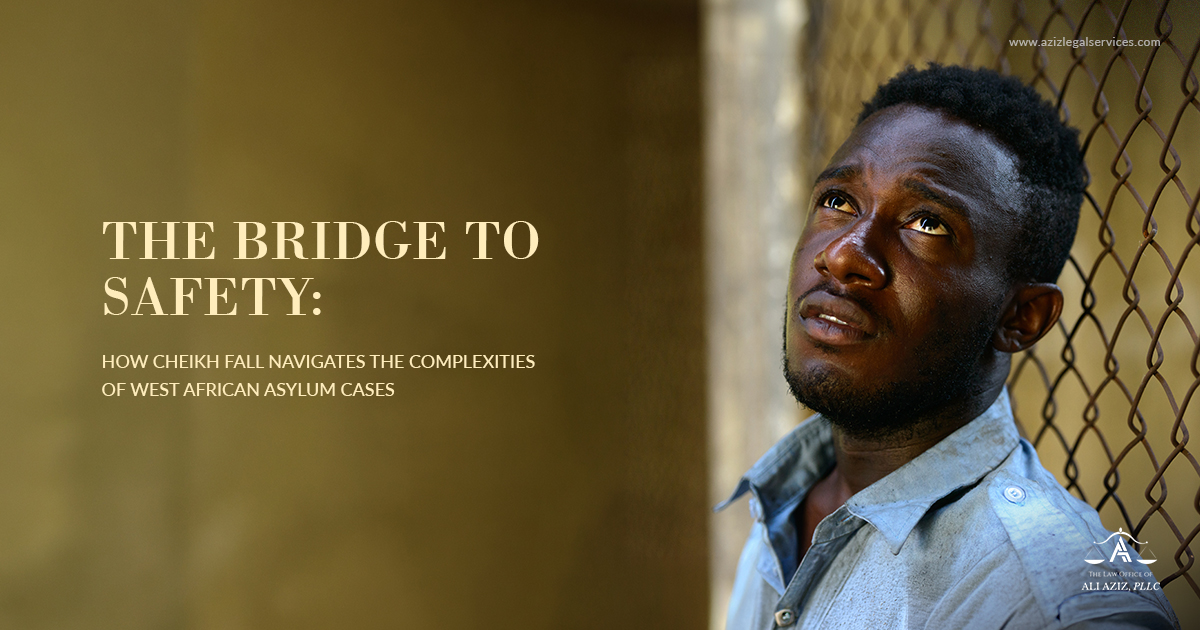
In the intricate world of U.S. immigration law, a successful asylum application often depends on more than just legal facts—it depends on the ability to translate trauma into a narrative that the system can understand.
A recent profile by New York Focus highlights the extraordinary work of Cheikh Fall, a former high school teacher from Mauritania who has spent nearly twenty years serving as a vital "fixer" and liaison for West African migrants in New York City. At Aziz Legal Services, we understand that the journey to safety is paved with challenges, and Fall’s story underscores why specialized support is critical for those fleeing persecution.
From Teacher to Advocate
Before arriving in the United States, Cheikh Fall was an English teacher and activist in Mauritania. After suffering state-sponsored violence and imprisonment due to his activism, he fled to New York. Remarkably, Fall navigated the asylum process on his own, winning his case without a lawyer—a feat he attributes to his background in education and linguistics.
Today, he uses those same skills to help others. He approaches an asylum application like an English essay, guiding applicants through a structured narrative:
Biographical Foundation: Establishing identity, ethnicity, and origin.
Country Conditions: Describing the systemic persecution faced by specific groups in the home country.
Specific Incidents: Providing the "who, what, where, and when" of the trauma that forced them to flee.
The Power of Detail in Asylum Claims
One of the most profound takeaways from Fall’s work is the emphasis on granular detail. In an asylum interview, "I was kidnapped" is often not enough. Fall pushes clients to recall the sensory details: Was it dark or light? What were the subjects of the interrogation? Where exactly did the torture occur?
These details are the difference between a "boilerplate" application and a credible, winning claim. For West African clients, who may face language barriers or cultural hesitations in discussing trauma, having a liaison who understands their dialect and their history is indispensable.
Why Cultural Competence Matters
Fall’s role as a liaison between immigration lawyers and their clients highlights a gap that many legal firms struggle to fill. He isn't just translating words; he is translating experiences. He helps lawyers understand the political nuances of Mauritania, Senegal, and Mali, ensuring that the legal strategy aligns with the reality on the ground.
At Aziz Legal Services, we recognize that every immigrant has a unique story that deserves to be heard with clarity and compassion. Cheikh Fall’s twenty-year legacy is a testament to the fact that while the legal system is daunting, the right guidance can turn a story of survival into a future of safety.